
The Reserve Bank of India (RBI) raised the minimum capital requirement for so-called shadow banks and tightened rules on deposits and bad loans to avoid any potential risk to the economy from these rapidly growing finance firms by regulating them like traditional banks.

A top-class board is important from a systemic point of view, more so at a time when the wider financial world and India Inc is chasing the same talent as banks.

The decision assumes significance in the wake of a scam in the PMC Bank affecting lakhs of customers who are facing difficulties in withdrawing their money due to restrictions imposed by the Reserve Bank of India.

Central Bank of India's 21.5 per cent assets are either bad or have been restructured.

Penalty must act as a deterrent. If it is too low, it could encourage the regulated entities to lap up penalty instead of complying with the norms, suggests Tamal Bandyopadhyay.

Do not go for riskier options like co-operative bank only for the higher return. Even if you go for them, park only a small portion of your capital there, say Tinesh Bhasin and Sanjay Kumar Singh.

'Access to finance is one of the most crucial needs in the economy.'

To deepen the financial inclusion process, and help get more people under the formal financial system, the RBI has mooted the idea of small banks and payments banks.

'Are they assuming that by the end of May or the 15th of June, we will see the end of the pandemic?'

The deluge of offerings in the primary market, a muted results season and increasing talks of a Fed taper may quicken the pace of overseas investors selling Indian equities in the near term. The next few weeks may see a dozen companies tap the market for initial public offerings and raise about Rs 30,000 crore. These include the likes of Zomato, Glenmark Life Sciences, Utkarsh Small Finance Bank and Seven Islands Shipping.

Investors are pushing back more often against companies' resolutions on what is paid out to top executives. In the first four months of financial year 2022-23 (FY23), there have already been five such rejections, according to shareholder voting data from tracker Adrian, a platform maintained by the proxy advisory firm Institutional Investor Advisory Services India (IiAS). Two of these have been at multiplex chain PVR and direct-to-home company Dish TV India.

It has been a year since the Reserve Bank of India (RBI) initiated prompt corrective action (PCA), an exercise that puts weak banks under central bank scrutiny, against the 94-year-old Lakshmi Vilas Bank (LVB). But recently, this low-profile Chennai-headquartered bank found itself attracting some unwonted publicity when 60 per cent of its shareholders voted against a proposal to re-appoint seven directors, including one of the promoters, K R Pradeep (who holds around 2 per cent), and the company's managing director & chief executive officer S Sundar.

Among major Sensex shares, PowerGrid fell the most by 2.76 per cent. IndusInd Bank dropped 2.34 per cent, HUL by 2.23 per cent and NTPC by 2.04 per cent. ICICI Bank, HDFC Bank, HDFC, ITC, Infosys, L&T, Bajaj Finance, Kotak Bank, HCL Tech and Tech Mahindra were among the losers. On the other hand, Tata Motors rose the most by 2.94 per cent, followed by Titan which gained 1.26 per cent. Mahindra & Mahindra, SBI and TCS were also among gainers.

The company employs 4,200 people across three centres in Noida and Bengaluru, which together employ a fourth of its global workforce

'Initially, Gift City was just another real estate project, but all that changed with Modi moving to New Delhi,' notes Tamal Bandyopadhyay.

The loss of income has severely dented the loan repayment ability of small borrowers

'Common sense says if one can afford, servicing the loans during this period is a better bet than postponing it by three months,' says Tamal Bandyopadhyay.

In her Budget 2023-24 presentation, she also said the Centre will launch the 'Dekho Apna Desh' initiative to promote domestic tourism.
It was widely expected that this time around, the government would be less likely to initiate fresh reforms and rather loosen its belt a little to give various segments of the economy, especially the multitudes that truly constitute India, something to smile about, says Sudip Bandyopadhyay.

Debit card payments remained sluggish due to the surge in digital transactions after the pandemic, and the Unified Payments Interface (UPI) has emerged as the most popular mode of money transfer, particularly for small value transactions, according to RBI data. In July 2020, the total debit card spends stood at Rs 2.81 trillion, as compared to Rs 3.15 trillion in July 2023, reflecting a growth of 11.96 per cent. UPI spends have seen a whopping growth of 428 per cent, zooming from Rs 2.90 trillion to Rs 15.33 trillion during the same period, the data revealed.

Record liquidity infusion by the central bank in the banking system during the financial year 2020-21 amid sluggish economic activity resulted in banks investing more in safe government papers than in extending loans, data from Reserve Bank of India (RBI) showed. This trend has not been seen in nearly two decades, barring 2016 - the year of demonetisation.
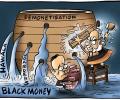
A more vigilant Opposition and a more aware civil society including the media could have certainly helped keep a check on an unhealthy trend, says A K Bhattacharya.

The World Bank has approved a $120 million loan to support the development of India's small and medium enterprises sector.

Calculate his monthly expenses, health care spending, how much funds will he need once he retires, and whether his current savings and investments will enable him to manage his lifestyle through retirement, suggests Ashok Kumar E R, CEO and co-founder, Scripbox.

rediffGURU Jinal Mehta answers readers' financial planning and health insurance queries

Banks are also weighing the option of hiring experts for help in specialised areas.

Since the bankcuptcy law came into effect from December 2016, with every quarter, the recovery rate has progressively been going down, notes Tamal Bandyopadhyay.

In its scheme of things, tackling inflation now comes ahead of ensuring growth in the world's sixth largest economy, points out Tamal Bandyopadhyay.

'Is it advisable to have more number of scrips in small quantities or a few scrips in big quantities?'

The RBI has this year cut interest rates by 110 basis points in four instalments but banks have passed only a part of it to borrowers. Before the last reduction earlier this month of 35 basis points, the bank on an average had passed only 29 basis points out of 75 basis points cut affected during 2019.

The previous two sessions have seen benchmark indices, the BSE Sensex and Nifty presenting signs of fatigue, reaching closer to its all-time highs level. Both indices are down approximately 1 per cent from recent highs and 2 per cent away from reaching a new peak. This has led to confusion on the street about its ability to reach another milestone. The present bullish trend in the leading indices; which has displayed smart recovery since late March this year, remains intact as the market breadth continues to stay elevated.

India's mutual fund (MF) industry had barely any retail footprint when it completed 50 years in 2013. MFs had Rs 7 trillion in assets under management (AUM) in March 2013, of which around Rs 5 trillion was in institution-focused debt funds. By comparison, bank deposits in the country stood at Rs 67.5 trillion around the same time.

Fundraising activity in the debt market is gaining momentum ahead of the festival season. Several non-banking financial companies (NBFCs) and the National Bank for Agriculture and Rural Development (Nabard) are planning to raise at least Rs 5,560 crore in the next two days by issuing bonds, with a greenshoe size of Rs 6,370 crore. Ajay Malglunia, managing director and head of investment grade group at JM Financial, said, "The market likes certainty, the market will gain clarity after the US Federal Reserve's (Fed's) policy.

A 25 per cent year-on-year (Y-o-Y) increase in budget allocation towards the roads sector for FY24 has led to renewed interest among investors. However, a combination of escalating costs for Bharatmala and unseasonal rains to some extent have impacted progress. Bharatmala's cost has nearly doubled from Rs 5.35 trillion to Rs 10.6 trillion and the finance ministry has asked MoRTH to go slow until Cabinet approval is received.

Arun Jaitley had proposed in the Budget to double the rate of capital gains tax on debt MFs to 20%.

One smells a rat when cases are settled for too small a price offered either by the highest bidder or the promoter -- within and outside the legal ambit of insolvency process, observes Tamal Bandyopadhyay.

Banks are in need of government support to manage the stressed assets

One common mistake investors commit during profit booking is not having a plan for the redeployment of the money that comes into their account.

'Returns can be very variable in equity markets.' 'That is why I tell small investors don't put 100 per cent of your money in equities, even if you are young.'
.jpg)
Addressing a Ficci-organised banking summit in Mumbai, he at the same time said that it will take several years for the country's banks to achieve the status of a large global bank.
 © 2026 Rediff.com - Advertise with us - Disclaimer - Privacy Policy - Sitemap - Feedback - About us - Terms of use - Grievances